Physical Address
Ahmedabad 380009
Physical Address
Ahmedabad 380009
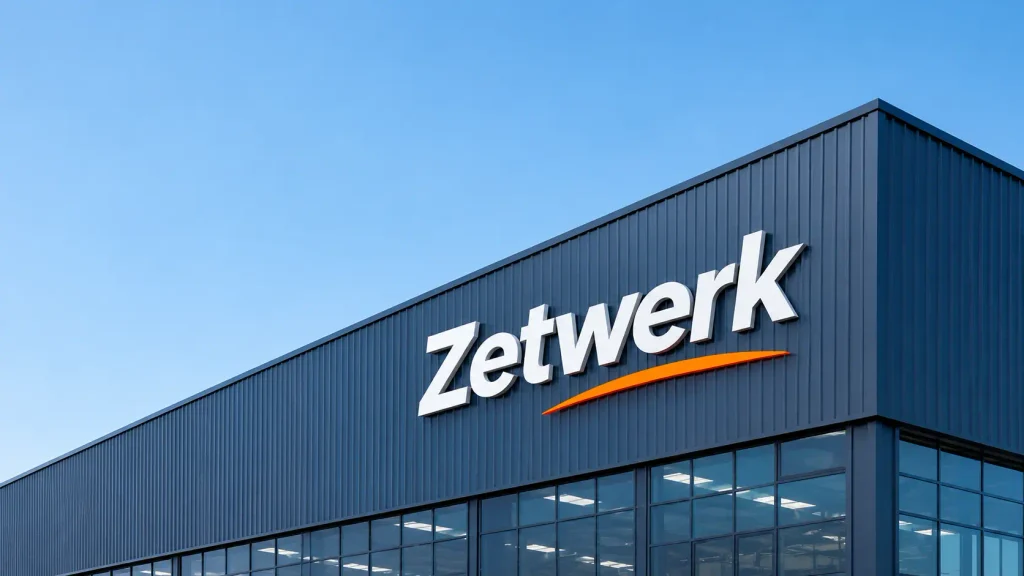
From a small idea in 2018 to a manufacturing unicorn, Zetwerk is transforming how businesses source, manufacture and deliver industrial products.
The Zetwerk growth story is an example of how technology can transform one of India’s most traditional industries: manufacturing. Founded in 2018 by four IIT alumni, Zetwerk started with an idea to simplify manufacturing operations for large businesses. However, the founders soon realised that companies needed more than software. They needed reliable manufacturing partners who could manage sourcing, production, quality and delivery.
That insight led Zetwerk to change its business model from a software-as-a-service (SaaS) platform to a B2B manufacturing marketplace. In August 2021, the company entered India’s unicorn club after raising $150 million in a Series E funding round at a reported valuation of $1.33 billion.
Today, Zetwerk operates as a technology-led manufacturing platform serving customers across several industrial sectors. Here is how the company built its place in India’s manufacturing ecosystem.
Zetwerk was founded in May 2018 by four IIT alumni: Amrit Acharya, Srinath Ramakkrushnan, Rahul Sharma and Vishal Chaudhary.
Each founder brought experience from different areas of business and operations. Amrit Acharya had worked with ITC and McKinsey, where he gained exposure to procurement, manufacturing operations and supplier management. Srinath Ramakkrushnan, Rahul Sharma and Vishal Chaudhary also brought experience from the technology, logistics and business operations sectors.
Their shared understanding was that manufacturing businesses often faced difficulties finding dependable suppliers, managing fragmented supply chains and ensuring that products were delivered on time.
The founders saw an opportunity to use technology to bring more organisation, transparency and efficiency to this process.
When Zetwerk started in Bengaluru in 2018, its original plan was to build a software platform for large manufacturing companies.
The initial product was designed to help businesses manage their existing supplier networks and manufacturing operations. The idea was to make procurement and supply-chain management more organised through technology.
However, the founders soon discovered a bigger problem. Companies did not just want software to manage suppliers. They also wanted help finding new manufacturing partners and getting products made reliably.
This feedback made the team rethink its original business model.
One of the most important moments in the Zetwerk growth story was its decision to move beyond software.
During conversations with potential customers, the founders realised that businesses were struggling to discover reliable suppliers. Even companies interested in their software were asking for help finding manufacturers.
Instead of continuing with the original SaaS plan, Zetwerk pivoted towards a managed B2B manufacturing marketplace.
The platform began connecting businesses that needed custom-made products with manufacturers that had the capability to produce them.
This was a significant change. Zetwerk was no longer just helping companies manage their existing supply chains. It was actively helping them source, manufacture and deliver products.
The pivot gave the company a clearer business opportunity and became the foundation of its future growth.
Unlike traditional e-commerce platforms that sell ready-made products, Zetwerk focuses on custom manufacturing requirements.
Businesses approach the platform with product specifications, engineering requirements or project needs. Zetwerk then works with suitable manufacturing partners to fulfil those requirements.
Its technology-led operating model helps coordinate several stages of the manufacturing process:
This model allows businesses to access manufacturing capacity without having to independently manage every supplier and production activity.
Zetwerk describes its technology platform as a way to connect fragmented manufacturing capacity and make complex supply chains more coordinated.
Zetwerk’s growth attracted significant investor attention as it expanded its manufacturing marketplace.
In February 2021, the company raised $120 million in a Series D funding round led by Greenoaks Capital and Lightspeed Venture Partners.
Just six months later, in August 2021, Zetwerk raised another $150 million in a Series E funding round led by D1 Capital Partners.
The round valued the company at a reported $1.33 billion, making Zetwerk one of India’s manufacturing unicorns.
The milestone was important not only for the company but also for India’s startup ecosystem. It demonstrated that large technology businesses could emerge from industrial and manufacturing sectors, not just consumer-facing markets.
Zetwerk’s business has expanded beyond its early manufacturing categories.
Its platform serves customers across multiple sectors, including:
The company works with manufacturing partners and its own facilities to fulfil a wide range of industrial requirements.
According to Zetwerk’s company website, as of March 31, 2026, its manufacturing platform served 1,802 customers and worked with 6,979 third-party suppliers across 26 countries. It also reported 26 owned manufacturing facilities across four countries.
These figures illustrate the scale of the network it has built since its launch.
Zetwerk’s model focuses on solving the coordination challenges involved in manufacturing.
A company developing an industrial product may need different suppliers for components, fabrication, assembly and delivery. Managing all these relationships independently can become complicated.
Zetwerk aims to simplify that process through a technology-enabled network of manufacturers and suppliers.
Its approach combines three important elements:
A connected supplier network: Businesses can access manufacturing partners across different categories instead of searching for every supplier independently.
Technology-led coordination: Software helps manage manufacturing workflows, supplier matching, production planning and quality processes.
A managed execution model: The platform coordinates different stages of fulfilment, helping customers manage complex manufacturing requirements.
The combination of these capabilities gives Zetwerk an opportunity to serve businesses that need more than a simple online supplier directory.
Zetwerk’s journey offers useful lessons for entrepreneurs and businesses, particularly those building solutions for traditional industries.
The founders initially believed that manufacturing businesses needed better software. Customer conversations revealed a deeper problem: finding dependable suppliers and getting products manufactured.
Zetwerk’s move from SaaS to a managed B2B marketplace shows why founders must be willing to rethink their original plans when customer feedback reveals a stronger opportunity.
Manufacturing may not appear as exciting as consumer technology, but it has significant opportunities for innovation. Better coordination, transparency and technology can improve complex industrial processes.
In manufacturing, a product must meet specifications, quality requirements, budgets and delivery timelines. Solving these operational challenges is central to building customer trust.
The Zetwerk growth story shows how a startup can identify an overlooked problem in a traditional industry and build a technology-led business around it.
What began as a SaaS idea in 2018 evolved into a B2B manufacturing marketplace after the founders listened to customers and changed direction. Its unicorn milestone in 2021 marked an important moment in India’s industrial startup ecosystem.
Zetwerk’s journey also highlights a wider opportunity for Indian entrepreneurs. The next generation of successful startups may not come only from food delivery, fintech or e-commerce. They can also emerge from manufacturing, engineering, industrial supply chains and other sectors that power the real economy.
India’s manufacturing future will depend on businesses that can combine technology, engineering and execution. Zetwerk is one example of a startup working towards that opportunity.
Zetwerk is an Indian technology-led manufacturing platform that connects businesses with manufacturing partners and helps coordinate sourcing, production, quality and delivery.
Zetwerk was founded in 2018 by four IIT alumni: Amrit Acharya, Srinath Ramakkrushnan, Rahul Sharma and Vishal Chaudhary.
Zetwerk was founded in May 2018 in Bengaluru, India.
Zetwerk entered India’s unicorn club in August 2021 after raising $150 million in a Series E funding round at a reported valuation of $1.33 billion.
Zetwerk connects businesses with manufacturing suppliers and coordinates custom manufacturing requirements across different industrial sectors.
Its business serves sectors such as energy, renewables, consumer electronics, aerospace, defence, industrial machinery, oil and gas, and precision manufacturing.
Zetwerk initially planned to build a SaaS platform to help large businesses manage manufacturing suppliers and operations. It later pivoted to a B2B manufacturing marketplace.
BizzUdaan is a business storytelling and publishing platform that highlights the journeys of startups, entrepreneurs and growing companies. Through business stories, founder journeys and industry insights, BizzUdaan aims to bring India’s business ecosystem into the spotlight.